7 Everyday Habits That Quietly Affect Your Gut and Your Skin
By the PrimeBiome Team · October 29, 2026
When skin looks tired or digestion feels off, it's tempting to look for one big cause. More often, it's a collection of small daily habits. Because your gut and skin are so closely linked, the same habits tend to influence both. Here are seven worth paying attention to.
1. Eating the same foods every day
Gut bacteria love variety. Each plant food feeds a different group of microbes, so a repetitive menu can narrow your microbiome. Try adding one new vegetable, fruit, bean or grain each week.
2. Skimping on sleep
Your body does much of its repair work at night, including skin renewal. Short or irregular sleep can leave both your gut and your complexion looking and feeling worn out.
3. Drinking too little water
Water keeps fiber moving through your system and helps your skin stay supple. Keep a bottle within reach and sip throughout the day.
4. Eating in a rush
Wolfing down meals often means swallowing extra air and chewing less, both of which can leave you bloated. Slow down, put your fork down between bites and give digestion a head start.
5. Living in constant stress mode
Stress signals travel straight from the brain to the gut. Even five minutes of deep breathing or a short walk can help both systems settle.
6. Leaning on ultra-processed snacks
Highly refined foods offer little fiber for your good bacteria. Swapping one packaged snack a day for fruit, nuts or yogurt is an easy upgrade.
7. Being inconsistent with supplements
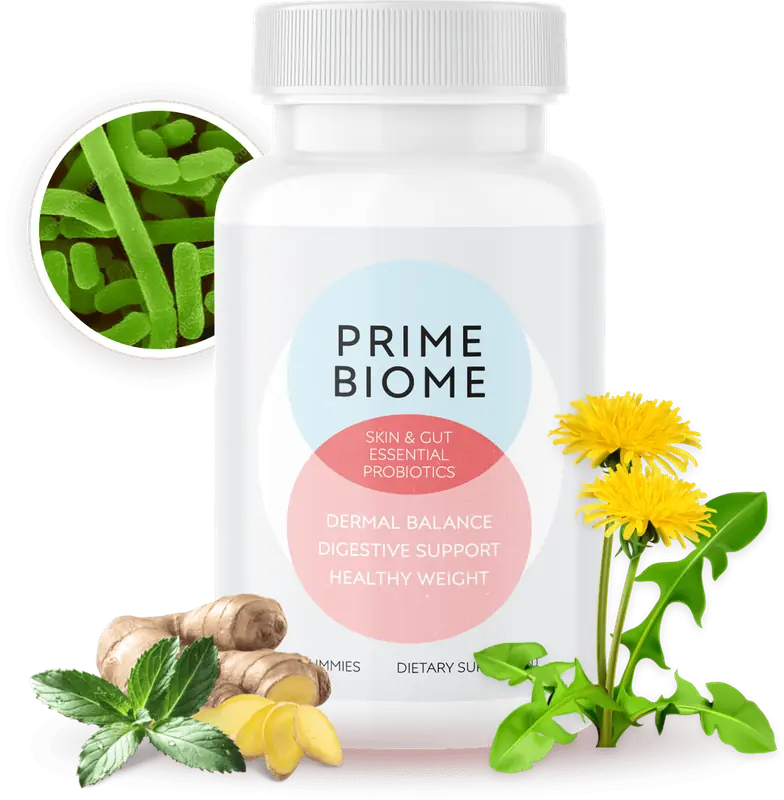
A gut-health supplement taken "whenever you remember" won't do much. If you use one like PrimeBiome, link it to a fixed daily habit so it becomes automatic.
Probiotics vs. Prebiotics vs. Postbiotics: What's the Difference?
By the PrimeBiome Team · October 29, 2026
Walk down any supplement aisle and you'll see these three terms everywhere. They sound alike, but each one plays a distinct role in gut health. Here's a simple breakdown.
Probiotics: the helpful bacteria
Probiotics are live microorganisms that offer a benefit when you consume them in adequate amounts. You'll find them in fermented foods such as yogurt, kefir, sauerkraut and kimchi, as well as in supplements. Some strains are fragile, while spore-forming strains like Bacillus coagulans are naturally more resistant to heat and stomach acid.
Prebiotics: the food for those bacteria
Prebiotics are fibers your body can't digest but your gut bacteria can. Inulin is one of the best-known examples. It occurs naturally in chicory root, onions, garlic, leeks and bananas. Without prebiotics, probiotics have less fuel to thrive.
Postbiotics: what the bacteria produce
Postbiotics are the beneficial compounds left behind when bacteria ferment fiber. Short-chain fatty acids are a well-known example; they help nourish the cells that line the colon.
Why combining them makes sense
Think of it like gardening. Probiotics are the seeds, prebiotics are the fertilizer and postbiotics are the harvest. Products that pair a probiotic with a prebiotic are often called synbiotics. PrimeBiome's ingredient list follows this approach by combining B. coagulans with inulin, then adding botanicals for extra digestive and skin support.
Why Bloating Happens and Simple Ways to Feel Lighter
By the PrimeBiome Team · October 29, 2026
Almost everyone experiences that tight, puffy feeling after a meal from time to time. Occasional bloating is usually harmless, but it's uncomfortable. Understanding why it happens is the first step toward feeling lighter.
Common everyday triggers
- Swallowed air from eating quickly, chewing gum, drinking through straws or sipping carbonated drinks.
- Large meals that stretch the stomach and slow digestion.
- Certain foods such as beans, onions and some sugar alcohols that produce gas as bacteria ferment them.
- Salty foods that encourage the body to hold onto water.
- Irregularity, which can leave you feeling full and heavy.
- Stress, which can slow or speed up digestion.
Simple habits that can help
- Eat slowly and chew thoroughly.
- Choose smaller, more frequent meals when you feel sensitive.
- Take a 10-minute walk after eating to encourage movement through the gut.
- Increase fiber gradually rather than all at once, and drink plenty of water.
- Try a warm cup of fennel, ginger or lemon balm tea after dinner.
Those last three herbs are also part of the PrimeBiome formula, alongside slippery elm bark and a spore-forming probiotic.
When to see a doctor
Persistent or severe bloating, especially with pain, unexplained weight changes, fever or changes in bowel habits, deserves a conversation with your healthcare provider.
Gummy vs. Capsule Supplements: Which Format Is Right for You?
By the PrimeBiome Team · October 29, 2026
Choosing a supplement isn't only about ingredients. The format you choose affects how easy it is to stay consistent, and consistency is what makes a gut-health routine work. Here's how gummies and capsules compare.
Why people choose capsules
- They are often tasteless and quick to swallow with water.
- They can hold certain ingredients that are difficult to put into a chewable.
- They contain no added flavoring.
Why people choose gummies
- No swallowing pills. Many adults find large capsules unpleasant or difficult.
- No water needed. You can take a gummy anywhere, anytime.
- Better consistency. A pleasant taste makes it easier to remember, turning a chore into a small daily treat.
- Easy to share the routine. Couples and families often find gummies simpler to keep on the kitchen counter.
Does format affect probiotics?
It can. Many probiotic strains are sensitive to heat and moisture, which makes them harder to use in gummies. That's why gummy probiotics often rely on spore-forming strains such as Bacillus coagulans, which stay stable until they reach the intestines.
The bottom line
If you never miss a capsule, either format can work. If you've abandoned pills in the past, a gummy like PrimeBiome may be the change that finally helps you stick with it. Read about the benefits of PrimeBiome to see if it fits your goals.